
Wash-and-Dry Toilets: What Families Should Know
Needing help with personal hygiene can feel frustrating and undignified for the person involved, while relatives may worry about safety and increasing care. A wash-and-dry toilet can help, but only when its controls, transfer position and servicing requirements suit the user.
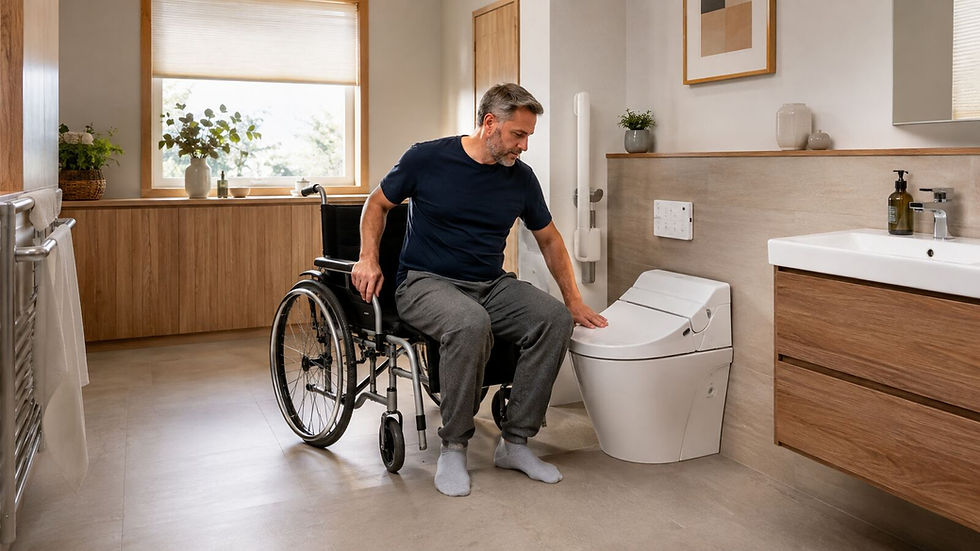
With a proper trial and well-planned bathroom, these toilets can support privacy and reduce physical effort. This guide explains what families should test, which installation details matter and what to ask before choosing a model.
💡 Quick answer: trial the exact toilet
A wash-and-dry toilet is most useful when the person can transfer safely, operate the controls and sit in the correct washing position. Do not choose from specifications alone. Trial the proposed model with the user’s wheelchair, rails and any carer assistance before ordering.
Make the controls genuinely usable
Controls may be fixed to the seat, mounted on the wall or provided as a remote handset. Check reach, hand strength, vision and understanding. A side control can obstruct a lateral transfer, while an unsecured remote may be dropped or lost. Frequently used settings should be simple to repeat.
Coordinate transfers and services
Confirm the preferred transfer side, finished seat height and rail positions. The toilet also needs water, drainage and a suitable electrical supply installed to the manufacturer’s requirements. Plan accessible isolation points and leave room for engineers to service the unit without dismantling the bathroom.
✅ Five questions for the supplier
What happens during a power cut, and can the toilet flush manually?
Can the user trial spray position, pressure, temperature and drying time?
Will the controls clash with the wheelchair transfer route or support rails?
Who provides local servicing, replacement parts and emergency repairs?
Which cleaning products and ongoing consumables are required?
🏠 Our view
A sophisticated toilet cannot compensate for poor room planning. The WC, wheelchair route, transfer space, rails, door and electrical services must be coordinated around the individual. An ‘accessible’ label is not evidence that a model suits a particular person.
💬 How Transform Architects can help
If your family is considering a wash-and-dry toilet, Transform Architects can review the bathroom, test transfer layouts and coordinate with occupational therapists, electricians and suppliers before installation. Contact us to reduce the risk of buying equipment that the room or user cannot use comfortably.
Related reading: How Much Space Does a Wheelchair-Accessible Bathroom Need?
Comments